


January 8th, 2026 | by Caitlin Boyarsky
One of the best parts about living in Richmond, Vermont is the amazing bike trail networks right down the road. The town becomes a bike hub in the warmer months with people traveling from near and far to access the many free mountain bike trails in the area. In just a short bike ride from town, you can find 3-4 trail networks that are well kept by volunteers and enjoyed by anyone interested. Well, almost anyone.
One issue with these trails? They–like most mountain bike trails around the world–aren’t adaptive mountain bike friendly. Meaning, they haven't been built with adaptive mountain bikes in mind. Sometimes this means turns don't have the right camber which is hard for a 3 wheeled bike but it can also be as simple as the trails and bridges being slightly too narrow to fit the width of the bike.
Recently, Richmond Mountain Trails set out to improve this issue last year by introducing a new bike park down the road in the neighboring town of Bolton called the Driving Range. Built entirely with adaptive mountain bikes in mind. It is the first of its kind that we know of, and it's paving the way for what's possible for adaptive mountain biking in the future.
We interviewed adaptive athletes Allie Bianchi and Greg Durso as well as Richmond Mountain Trails’ Board President, Berne Brody, following the release of their brand new film: Best Day Ever. The film highlights the new trail network as well as Allie and Greg’s journeys getting back into mountain biking after injury. The film is making headlines across the world as it wins several ‘Best Film’ awards including for this year’s Banff Film Festival.
One of the best parts about living in Richmond, Vermont is the amazing bike trail networks right down the road. The town becomes a bike hub in the warmer months with people traveling from near and far to access the many free mountain bike trails in the area. In just a short bike ride from town, you can find 3-4 trail networks that are well kept by volunteers and enjoyed by anyone interested. Well, almost anyone.
One issue with these trails? They–like most mountain bike trails around the world–aren’t adaptive mountain bike friendly. Meaning, they haven't been built with adaptive mountain bikes in mind. Sometimes this means turns don't have the right camber which is hard for a 3 wheeled bike but it can also be as simple as the trails and bridges being slightly too narrow to fit the width of the bike.
Recently, Richmond Mountain Trails set out to improve this issue last year by introducing a new bike park down the road in the neighboring town of Bolton called the Driving Range. Built entirely with adaptive mountain bikes in mind. It is the first of its kind that we know of, and it's paving the way for what's possible for adaptive mountain biking in the future.
We interviewed adaptive athletes Allie Bianchi and Greg Durso as well as Richmond Mountain Trails’ Board President, Berne Brody, following the release of their brand new film: Best Day Ever. The film highlights the new trail network as well as Allie and Greg’s journeys getting back into mountain biking after injury. The film is making headlines across the world as it wins several ‘Best Film’ awards including for this year’s Banff Film Festival.
I'm Greg Durso and I'm the Chief Program ambassador at the Kelly Brush Foundation.
I'm Bene Broudy. I am a journalist, and co-director and producer of the Best Day Ever.
I’m Allie Bianchi. I’ve lived in Richmond, Vermont my whole life. I’ve always loved the outdoors whether it’s skiing, biking, hiking, really anything. I broke my neck in August 2022 and since then I have gotten really involved with the adaptive community and trying to build awareness within our own community.
I'm Greg Durso and I'm the Chief Program ambassador at the Kelly Brush Foundation.
I'm Bene Broudy. I am a journalist, and co-director and producer of the Best Day Ever.
I’m Allie Bianchi. I’ve lived in Richmond, Vermont my whole life. I’ve always loved the outdoors whether it’s skiing, biking, hiking, really anything. I broke my neck in August 2022 and since then I have gotten really involved with the adaptive community and trying to build awareness within our own community.
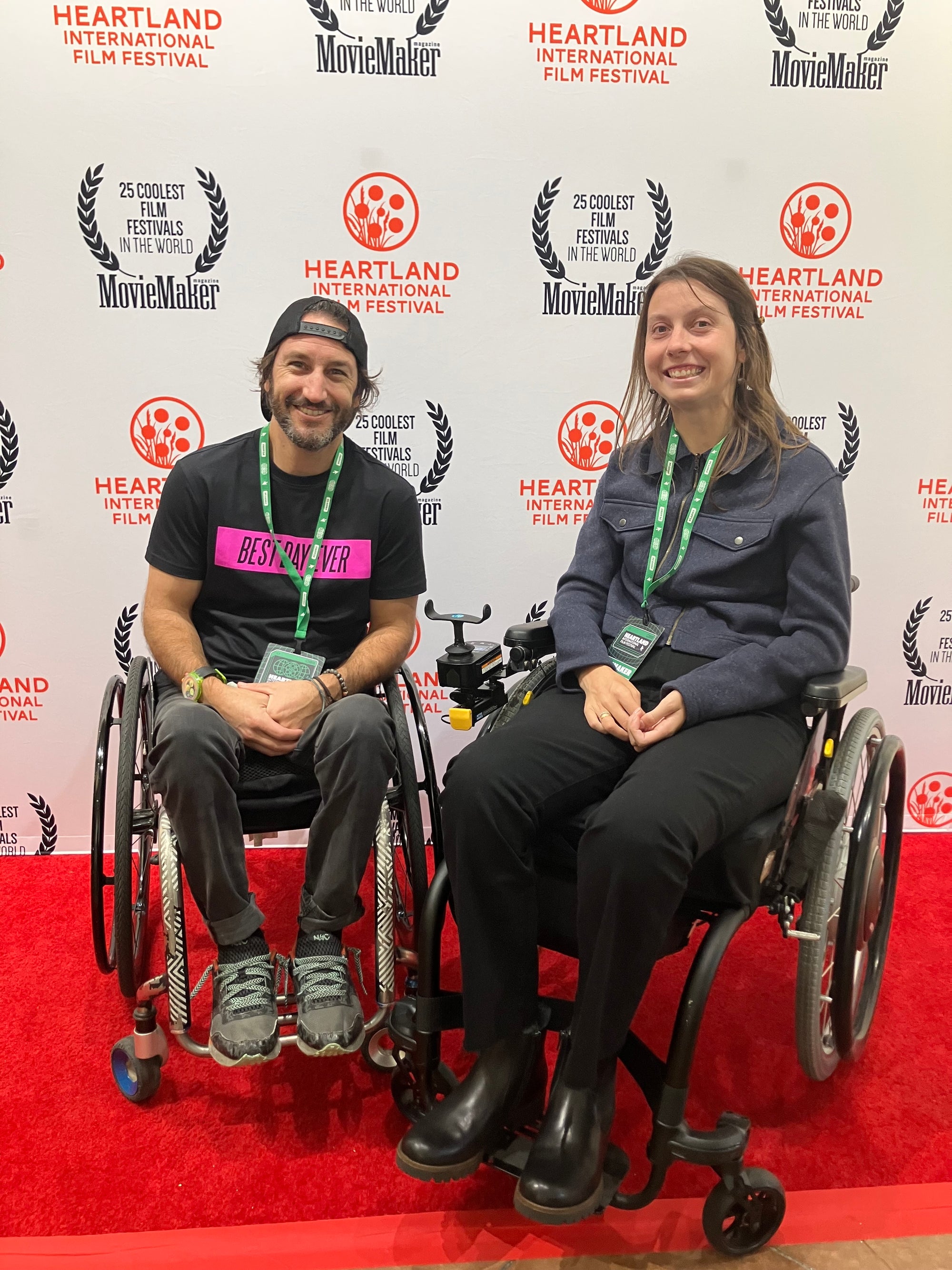
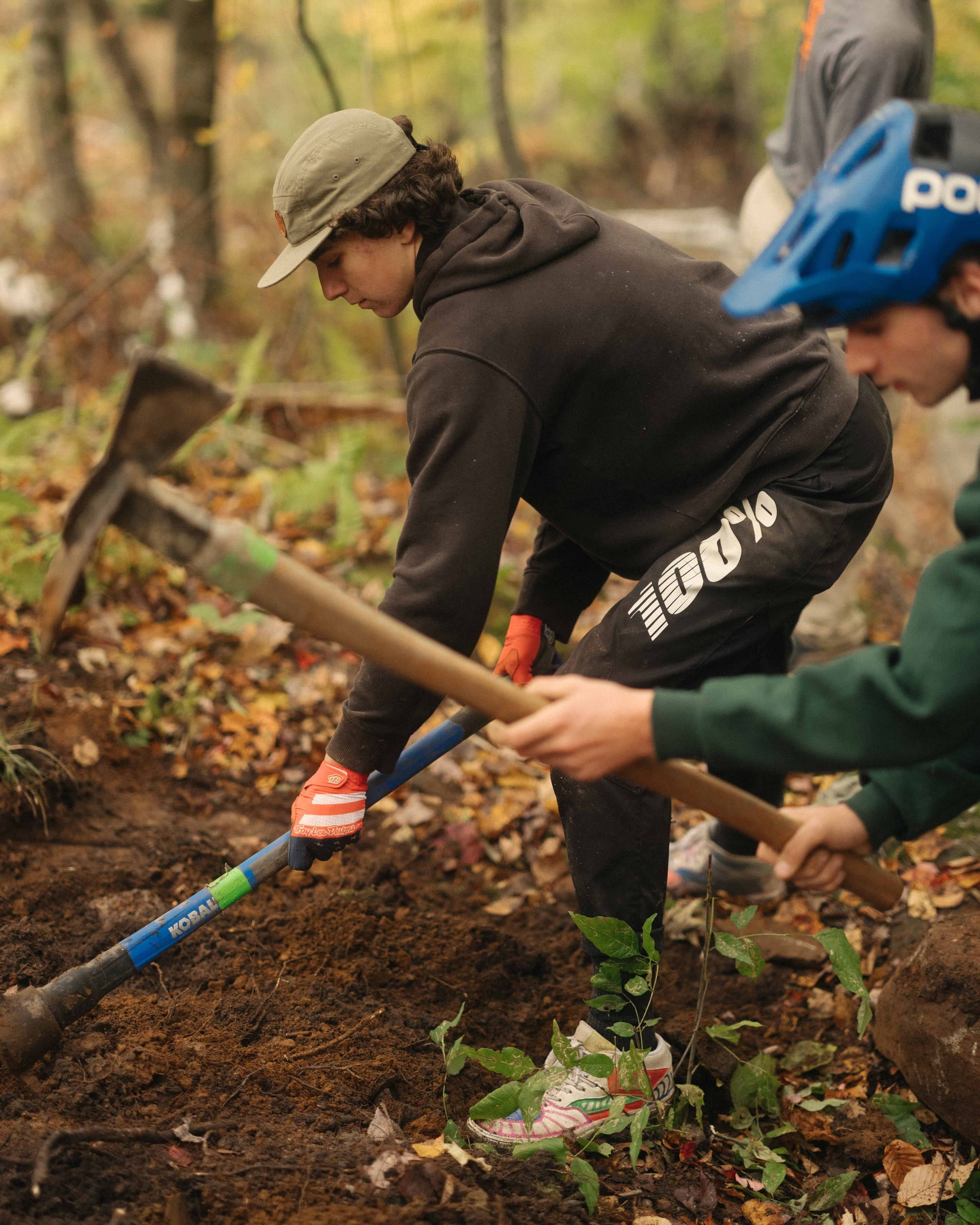
Pictured Above: 1. Adaptive athletes Greg Durso and Allie Bianchi. 2. Volunteer trail builders hard at work!
Pictured Above: 1. Adaptive athletes Greg Durso and Allie Bianchi. 2. Volunteer trail builders hard at work!
Greg: It’s a unique documentary about an amazing community in Vermont coming together to show the power of inclusive spaces and how to normalize outdoor recreation for everybody.
Berne: What was key for us is that this story is not a hero story. This is a story about community and about a trail system that evolved in Vermont. But the story is not just about Vermont, and it's not just about the Driving Range trails, it's about what's possible when you start to consider inclusivity and treating each other with love, empathy, and equality.
Allie: Best Day Everis a film that uses mountain biking as a vehicle to tell a story about the power of community and accessibility. But it can be applied to all areas of life and I hope that it’s just the start of raising awareness.
Greg: It’s a unique documentary about an amazing community in Vermont coming together to show the power of inclusive spaces and how to normalize outdoor recreation for everybody.
Berne: What was key for us is that this story is not a hero story. This is a story about community and about a trail system that evolved in Vermont. But the story is not just about Vermont, and it's not just about the Driving Range trails, it's about what's possible when you start to consider inclusivity and treating each other with love, empathy, and equality.
Allie: Best Day Everis a film that uses mountain biking as a vehicle to tell a story about the power of community and accessibility. But it can be applied to all areas of life and I hope that it’s just the start of raising awareness.
Greg: When we go to these film festivals, you're surrounded by so many talented individuals. It's such an honor just to be at these film festivals. And on top of that, we’ve won some pretty amazing awards. It's cool to be in the film world and have people appreciate the film so much.
Berne: When we were at Banff, a woman came up to me and asked, “who the hell are you?” hat stuck with me because most other films are made by a filmmaker who goes somewhere to capture a story about someone else. This is a film made by the people who are the subjects of the film. We had a really important story to tell and were moved to actually make a movie about it. I thought that comment was totally hilarious, because, right, who the hell are we? Here we are standing on the stage at Banff with all these incredibly talented people who have been doing this for decades and who are insanely accomplished filmmakers. And it's unbelievable to me and I think to all of us that we somehow are in the ranks with these people.
Allie: In Spain, we were walking through a park and this lady came up to us and said I just saw your guys’ film and then basically went on to say when they first saw this on the list of films over in Spain, they're like, “When we saw it in the program, we thought this is an American mountain bike film, and we don't really like Americans right now, we don't want to watch it. It was not at all what we expected. It goes to show that, yes, this is a mountain bike film, but there is so much more behind it.
Greg: When we go to these film festivals, you're surrounded by so many talented individuals. It's such an honor just to be at these film festivals. And on top of that, we’ve won some pretty amazing awards. It's cool to be in the film world and have people appreciate the film so much.
Berne: When we were at Banff, a woman came up to me and asked, “who the hell are you?” hat stuck with me because most other films are made by a filmmaker who goes somewhere to capture a story about someone else. This is a film made by the people who are the subjects of the film. We had a really important story to tell and were moved to actually make a movie about it. I thought that comment was totally hilarious, because, right, who the hell are we? Here we are standing on the stage at Banff with all these incredibly talented people who have been doing this for decades and who are insanely accomplished filmmakers. And it's unbelievable to me and I think to all of us that we somehow are in the ranks with these people.
Allie: In Spain, we were walking through a park and this lady came up to us and said I just saw your guys’ film and then basically went on to say when they first saw this on the list of films over in Spain, they're like, “When we saw it in the program, we thought this is an American mountain bike film, and we don't really like Americans right now, we don't want to watch it. It was not at all what we expected. It goes to show that, yes, this is a mountain bike film, but there is so much more behind it.
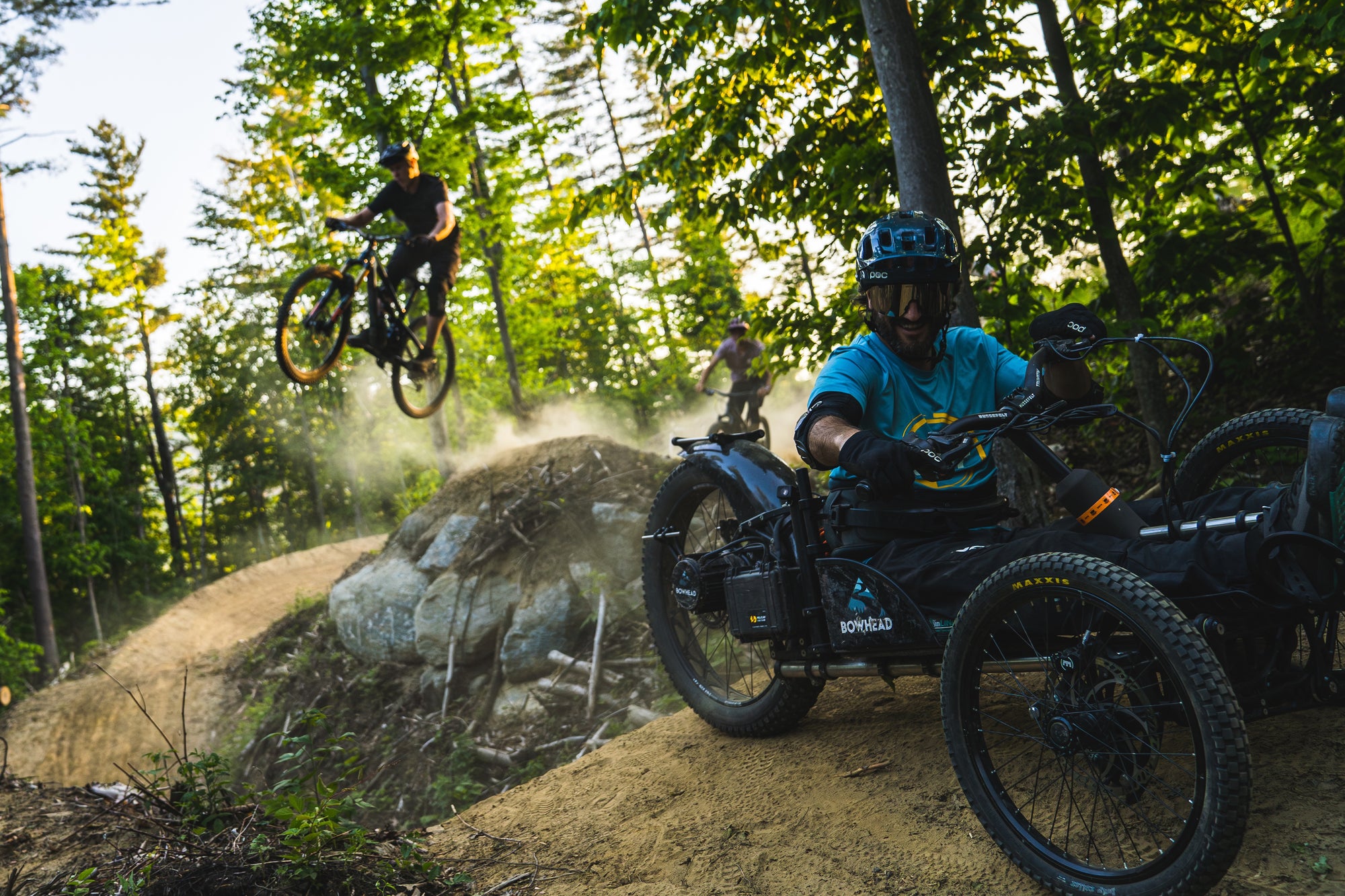
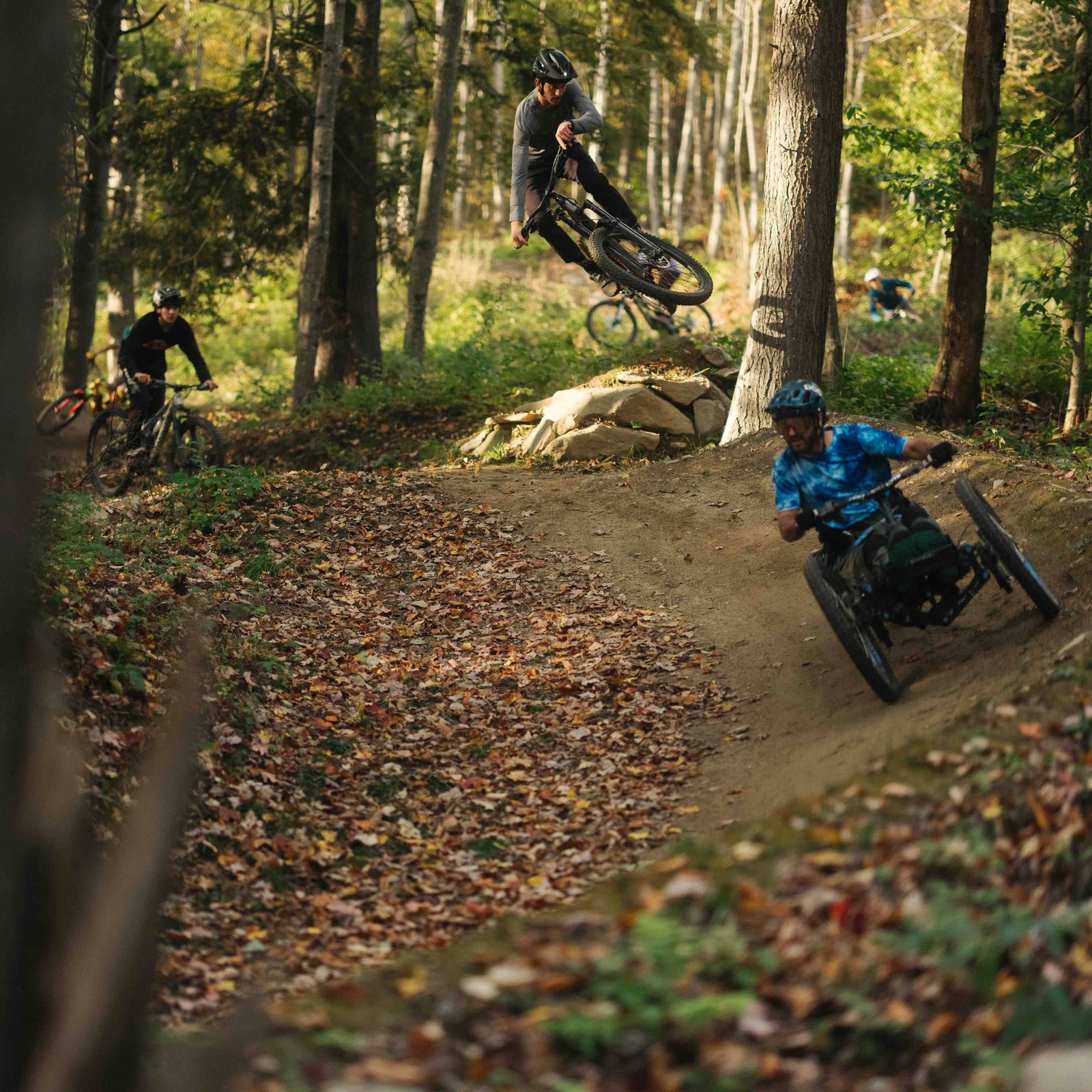
Pictured Above: Greg Durso riding the trail Hot Dogger at The Driving Range with friends in Bolton, Vermont.
Pictured Above: Greg Durso riding the trail Hot Dogger at The Driving Range with friends in Bolton, Vermont.
Greg: The best part is that it's a film about community, right? So if you're making a film about community, the community's gotta be together. So the best part of making the film was being together with this community that we love to be with.
Allie: If sharing our stories can help even just like one other person or can help create another trail network somewhere else that will have impact, I’m all in.
Berne: I have never directed or produced a film before, so there was a huge learning curve for me, and there continues to be as we put this film out in the world and try and figure out what it can become, what kind of impact it can have.
The best part was getting the opportunity to tell a story that needed to be told. The best and the worst part was figuring out how to do it justice, how to tell it with the love and respect and sensitivity and impact that it deserved.
It's was so important to me that Greg and Allie were really psyched about how this movie came out and how their stories were told. I think we achieved that and made something that's resonating with people everywhere and I couldn't have hoped for more.
Greg: The best part is that it's a film about community, right? So if you're making a film about community, the community's gotta be together. So the best part of making the film was being together with this community that we love to be with.
Allie: If sharing our stories can help even just like one other person or can help create another trail network somewhere else that will have impact, I’m all in.
Berne: I have never directed or produced a film before, so there was a huge learning curve for me, and there continues to be as we put this film out in the world and try and figure out what it can become, what kind of impact it can have.
The best part was getting the opportunity to tell a story that needed to be told. The best and the worst part was figuring out how to do it justice, how to tell it with the love and respect and sensitivity and impact that it deserved.
It's was so important to me that Greg and Allie were really psyched about how this movie came out and how their stories were told. I think we achieved that and made something that's resonating with people everywhere and I couldn't have hoped for more.
Berne: Greg always says every day is the best day ever. I think we all really try and approach every day as if it's the best day ever. And I think neither Greg nor Allie have ever been slowed down by their injury. They just continue to move through life with the attitude that every day is the best day ever.
Greg: I used to joke that the day I got injured was the best day ever. I wouldn't be here doing these things if we didn't have to. And you know, my mom says it in the film, when she calls it out, it's really how I truly feel about this stuff. It's been a little motto for all three of us, which is great.
Berne: Greg always says every day is the best day ever. I think we all really try and approach every day as if it's the best day ever. And I think neither Greg nor Allie have ever been slowed down by their injury. They just continue to move through life with the attitude that every day is the best day ever.
Greg: I used to joke that the day I got injured was the best day ever. I wouldn't be here doing these things if we didn't have to. And you know, my mom says it in the film, when she calls it out, it's really how I truly feel about this stuff. It's been a little motto for all three of us, which is great.
Pictured Above: Greg Durso riding Hot Dogger, a trail at the Driving Range in Bolton, Vermont.
Pictured Above: Greg Durso riding Hot Dogger, a trail at the Driving Range in Bolton, Vermont.
Greg: This is happening in other places. But no one really knows what's going on. We had the ability to help to capture what we're doing here and to show what a small community in Vermont can actually do. People don't know what they don't know. So it's just really exciting for people to see what's possible and what's out there. You can plug this community into anything else that you wanna be doing. And you can create inclusive spaces anywhere.
Obviously we hope to see more networks pop up, more channels being built, and the ability for our adaptive community to come together and have a say in what's going on and be thought of and be able to go out with the communities they love to be around and there's nothing holding them back from being able to do that.
Berne:
There's thousands of miles of trails across the US and the world. Many of those trails could be made adaptive friendly, many with a light lift. Some should not be made adaptive friendly, because it would change the character of the trail too much or it would be too expensive.
We believe that there are a lot of trails that could be retrofitted to be adaptive. So we're starting to work with trail organizations to assess and retrofit trails and hopefully have more opportunities for adaptive riders everywhere. It's not just an opportunity for adaptive riders to ride their bikes. It's a chance to change culture and have it just be normal that everyone is out on the trails together.
Allie: Just because something is adaptive, wheelchair friendly or adaptive mountain bike friendly, or any of those things, it doesn't make it any less than or easier than something else.
We use mountain biking in this film and all the trail networks that we've been building to create that message. But I think it can be applied to all aspects of life.
Greg: This is happening in other places. But no one really knows what's going on. We had the ability to help to capture what we're doing here and to show what a small community in Vermont can actually do. People don't know what they don't know. So it's just really exciting for people to see what's possible and what's out there. You can plug this community into anything else that you wanna be doing. And you can create inclusive spaces anywhere.
Obviously we hope to see more networks pop up, more channels being built, and the ability for our adaptive community to come together and have a say in what's going on and be thought of and be able to go out with the communities they love to be around and there's nothing holding them back from being able to do that.
Berne:
There's thousands of miles of trails across the US and the world. Many of those trails could be made adaptive friendly, many with a light lift. Some should not be made adaptive friendly, because it would change the character of the trail too much or it would be too expensive.
We believe that there are a lot of trails that could be retrofitted to be adaptive. So we're starting to work with trail organizations to assess and retrofit trails and hopefully have more opportunities for adaptive riders everywhere. It's not just an opportunity for adaptive riders to ride their bikes. It's a chance to change culture and have it just be normal that everyone is out on the trails together.
Allie: Just because something is adaptive, wheelchair friendly or adaptive mountain bike friendly, or any of those things, it doesn't make it any less than or easier than something else.
We use mountain biking in this film and all the trail networks that we've been building to create that message. But I think it can be applied to all aspects of life.
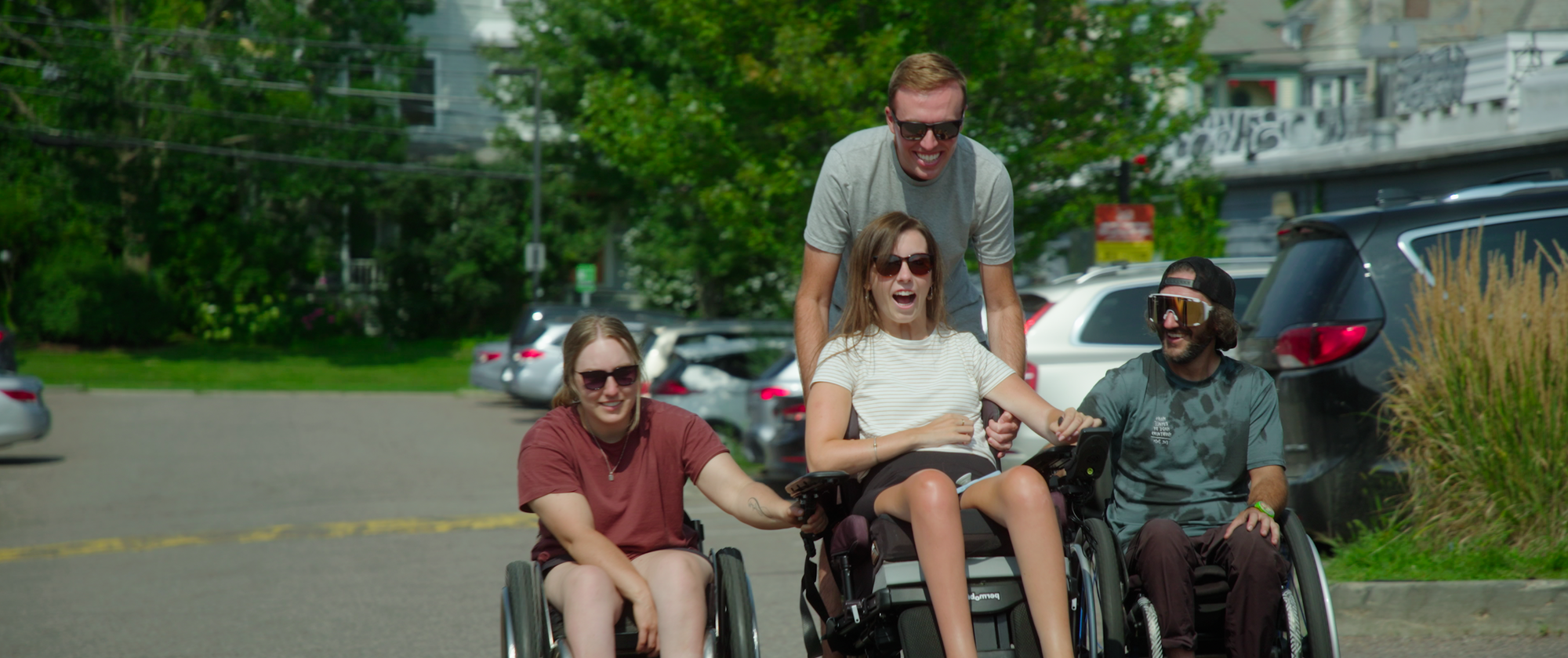
Pictured Above: Scene from the film Best Day Ever.
Pictured Above: Scene from the film Best Day Ever.
Greg: Having Tom, the trail builder, be on our bikes is a really key part of what we were trying to do. It was important that we used different adaptive bikes on the trails to make sure the network would be good for everyone. It wasn't built just for me or for us, right? It's for everyone.
Berne: It takes a village, right? Everyone in the mountain bike community in Vermont really came together and wanted to make it happen.
I hope that when people see this, that they will think about how to make change in their communities. When you see this movie, we hope that it makes you think about what positive change you can make where you live to make it more welcoming and more awesome for everybody.
Allie: Live life each day for what it is!
In Vermont, it's screening at the Big Picture Theater on January 15th at 7:00 PM. It’s a fundraiser for the Kelly Brush Foundation, Vermont Adaptive, VMBA and for the movie.
It’s traveling the world with the Banff World Tour. In Vermont, it’s screening in Burlington on February 7th at the Flynn Theater. You can see the schedule, buy tickets for some events, and make tax-deductible donations at bestdayever.mov.
And if you sign up for our newsletter at bestdayever.mov, we'll keep you posted where it's screening as more film festivals are announced.
Greg: Having Tom, the trail builder, be on our bikes is a really key part of what we were trying to do. It was important that we used different adaptive bikes on the trails to make sure the network would be good for everyone. It wasn't built just for me or for us, right? It's for everyone.
Berne: It takes a village, right? Everyone in the mountain bike community in Vermont really came together and wanted to make it happen.
I hope that when people see this, that they will think about how to make change in their communities. When you see this movie, we hope that it makes you think about what positive change you can make where you live to make it more welcoming and more awesome for everybody.
Allie: Live life each day for what it is!
In Vermont, it's screening at the Big Picture Theater on January 15th at 7:00 PM. It’s a fundraiser for the Kelly Brush Foundation, Vermont Adaptive, VMBA and for the movie.
It’s traveling the world with the Banff World Tour. In Vermont, it’s screening in Burlington on February 7th at the Flynn Theater. You can see the schedule, buy tickets for some events, and make tax-deductible donations at bestdayever.mov.
And if you sign up for our newsletter at bestdayever.mov, we'll keep you posted where it's screening as more film festivals are announced.





Leave a comment (all fields required)